
No one ever imagines having to deal with a nightmare pet the first time they meet them or pick them up from the pet shop. If anything, you imagine them comfortably settling into your home, with your family and friends too, and picture your new life with them from morning walks to evening cuddles and feeds. Sometimes, owners can predict poor behaviour in their pets, especially when they’re adopted from rescue homes. But in other cases, bad behaviour isn’t always easy to anticipate.
Owners can be surprised by their pets’ bad behaviour, which can be down to the breed of the animal, a reaction to other pets, health issues and pain, or simply unclear boundaries between the pet and its owner. Whether it’s anticipated or not, managing badly behaved pets can be difficult, and it can feel like you’re making no progress after trying several different management techniques. In this article, we’re looking at one management technique in particular – positive reinforcement – and will discuss why it’s a method that works across all pets, including dogs, cats and other companion animals.
What Is Positive Reinforcement?
Positive reinforcement is a technique that involves adding a pleasant or desirable reward to a specific action or behaviour to encourage it to be repeated and remembered. The method is an operant conditioning technique that is effective for both humans and animals. The opposing technique is negative reinforcement, which involves removing something desirable after an action or behaviour is carried out to stop it from happening again. There are age-old debates about which technique is more effective, but more modern hypotheses suggest that using both can be the most beneficial in encouraging certain behaviours. Some common examples of positive reinforcement include:
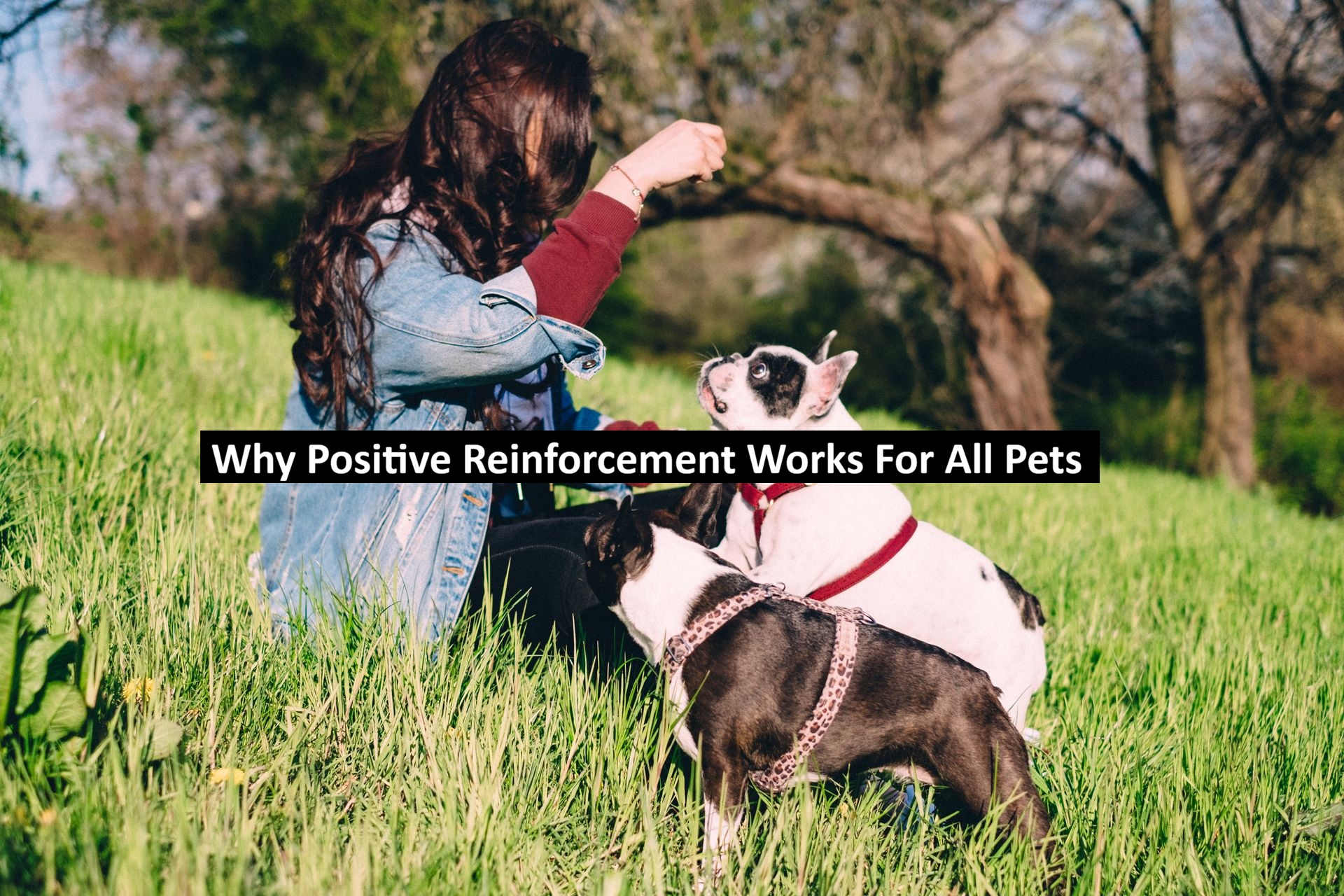
- Training a pet: An owner gives a dog a treat immediately after they follow orders and sit on command.
- At school: A teacher gives a student a merit or gold star in their workbook for completing their work to a high quality before other students.
- In the workplace: An employee may receive a promotion for their hard work over the year.
You can reinforce a certain behaviour in a number of different ways within this technique. There are 3 common reinforcers which are social praise, tangible rewards or token systems. Here’s an example of each:
Social praise – saying ‘well done’ or praising the behaviour with positive feedback
Tangible rewards – rewarding the behaviour with physical items like treats or a toy
Token System – tokens or stars that can be exchanged for a bigger reward or prize at the end
Read: Pet Care Products That Keep Your Pet Happy, Healthy, And Pampered
Why Does Positive Reinforcement Work?
There is a widely accepted scientific explanation as to why positive reinforcement is so effective. To understand it, it’s necessary to know what dopamine is and what its role in our nervous system is too.
Dopamine is a chemical messenger that helps pass information between our nerve cells. You may have heard it referred to as a neurotransmitter, which essentially means the same. Dopamine is known as a feel-good hormone because it creates feelings of reward and pleasure when it is released. So what is dopamine’s role in positive reinforcement?
In the brain, once a reward is received, dopamine is released, immediately creating feelings of pleasure in the brain and body. Because the reward was given straight after the action or behaviour was completed, our brains then make a clear association between the behaviour and the positive reward it led to.
Why Positive Reinforcement Can Be More Beneficial Than Punishment
Punishment is centred around clearly communicating behaviours that are bad and should be avoided – but it doesn’t teach us what the right behaviours look like. For this reason, positive reinforcement is considered the more effective technique in many cases because it allows animals to learn how they should be behaving as well as how they shouldn’t. Secondly, positive reinforcement is also known to boost confidence levels compared to punishment.
As you can imagine, punishing a pet over and over again will only lead them to feel confused and hopeless, without knowing how they can improve. You may also find that using positive reinforcement has improved benefits over a longer duration of time, as punishment can lead to demotivation and rebellion if continued for so long. Contrastingly, when pets feel praised, they will feel more engaged to continue behaving well.
Typically, you can expect to see positive reinforcement used in dog training or puppy development, as they are the most domesticated animal known to man, so need to be properly trained for everyone’s safety. Even if you think you know your dog and know how they will react, actually you don’t. There’s a chance that you might find yourself in a position where their behaviour changes unexpectedly and results in harming or biting a pedestrian.
This can result in expensive fines if the victim hires a personal injury solicitor, or worse – your dog may be put down. Although positive reinforcement is typically associated with managing the behaviour of dogs, it is highly effective on all pets too. Every dog, cat, bird and other animal all share the same basic brain chemistry that responds well to this technique, and over time you can shape their behaviours without resulting in punishment.